These services and technologies are essential for operating Herando and enable, for example, security-related functionalities. They also help us recognize whether you want to stay logged in to your profile so we can provide our services more quickly when you visit again.
Without these cookies, the website cannot be operated properly. Therefore, deactivation is not possible.
| Cookie name | Provider / lifetime | Purpose |
|---|---|---|
| herando | Herando / Session | Required so a user can stay signed in. Enables access to protected areas without signing in again. |
| herando-backend | Herando / Session | Ensures authentication in the backend area and access control for protected functions. |
| frontend | Herando / 2 hours | Required to maintain frontend sessions and avoid signing in again. |
| frontend_cid | Herando / 2 hours | Assigns the current session to the consent ID in the frontend area. |
| cc | Herando / 1 year | Stores your cookie consent settings. |
| cid | Herando / 1 year | Stores a unique ID for documenting your cookie consent. |
| _GRECAPTCHA | Google reCAPTCHA / 6 months | Protects the website from automated access, spam, fraud, and abuse. |
Legal basis:
Processing is based on Art. 6(1)(f) GDPR (legitimate interest in secure and functional operation of the website) and § 165(3) TKG (AT) / § 25(2) TTDSG (DE).
To further improve our services, we collect anonymized data for statistics and analysis. Using this data, we can, for example, measure visitor numbers and the effectiveness of specific pages on our website and optimize our content.
Providers:
Google Ireland Limited, Gordon House, Barrow Street, Dublin 4, Ireland
Meta Platforms Ireland Ltd., 4 Grand Canal Square, Dublin 2, Ireland
Purpose:
Analysis of user behavior, reach measurement, content optimization, and evaluation of individual page usage.
Processed data:
IP address (shortened/anonymized), device and browser information, visit duration, page views, interactions, referrer URL.
Legal basis:
Your consent pursuant to Art. 6(1)(a) GDPR in conjunction with § 165(3) TKG (AT) / § 25(1) TTDSG (DE).
Third-country transfer:
Transfer to third countries (e.g. USA) cannot be ruled out. Providers are certified under the EU–US Data Privacy Framework.
Storage period:
Up to 14 months unless otherwise stated.
| Cookie name | Provider / lifetime | Purpose |
|---|---|---|
| _ga | Google Analytics / 2 years | Identifies unique users |
| _gid | Google Analytics / 24 hours | User behavior analysis |
| _gat_* | Google Analytics / 1 minute | Request rate throttling |
| _gat_UA-* | Google Analytics / 1 minute | Controls data transmission |
| OTZ | Google Analytics / 1 month | Aggregated website traffic information |
| AEC | Google / 6 months | Protection against spam, fraud and abuse |
| NID | Google / up to 10 years | Embedding external content (e.g. YouTube) |
| _fbp | Meta (Facebook) / 6 months | Page view analysis |
| datr | Meta (Facebook) / 9 months | Security and fraud prevention |
| locale | Meta (Facebook) / 1 week | Stores language settings |
| oo | Meta (Facebook) / 13 months | Stores opt-out status |
| sb | Meta (Facebook) / 11 months | Browser identification |
| m_pixel_ratio | Meta (Facebook) / Session | Website performance testing |
You can withdraw your consent at any time via “Cookie settings”.
83.950,00 €
Oldtimerfarm BV
Steenweg op Deinze 51 C
9880 Aalter - Belgium
Xavier GSM: +32 (0)472 401338
info@oldtimerfarm.be
BTW BE 0886.122.516
| Body type | |
| Mileage | 140.541 km |
| Gearbox | Manual |
| Engine capacity | 3600 cm³ |
| First registration | 2004 |
Description of the model
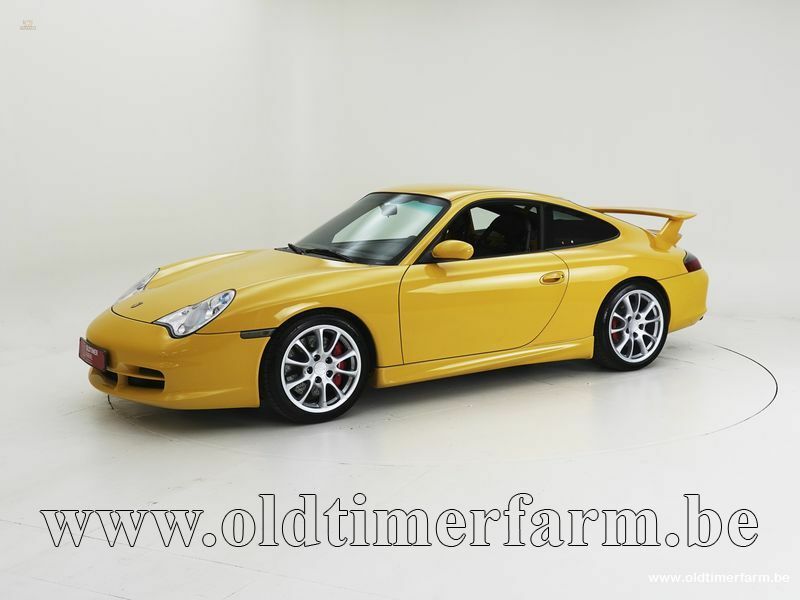
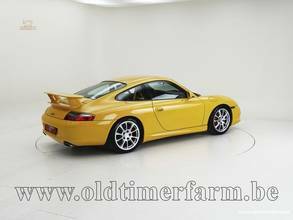
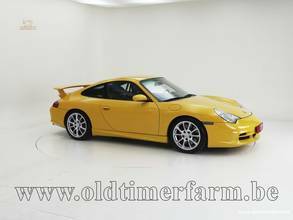
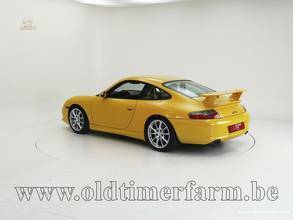
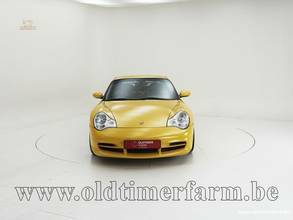
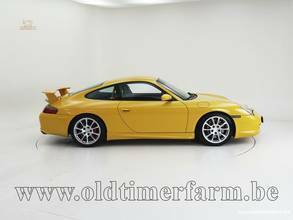
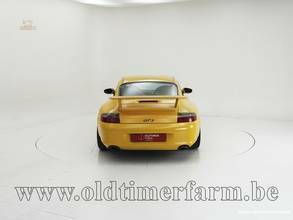
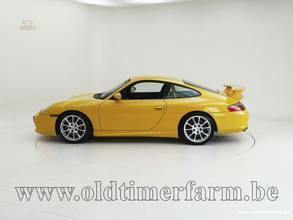
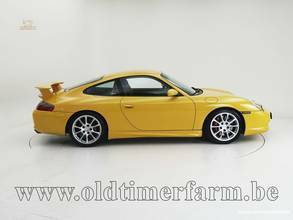
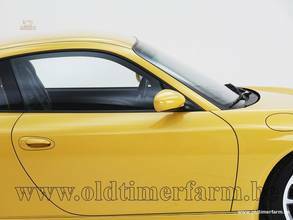
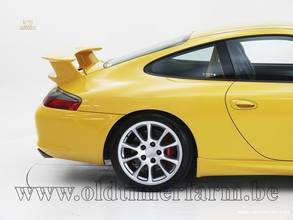
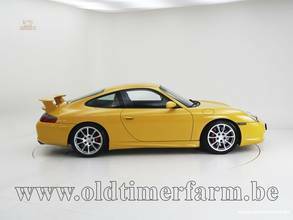
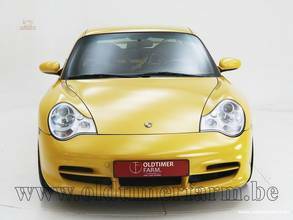
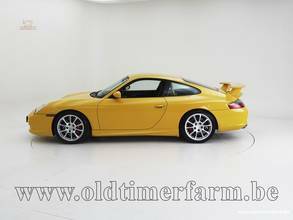
The Porsche 911 GT3 is a high-performance homologation model of the Porsche 911 sports car. It is a line of high-performance models, which began with the 1973 911 Carrera RS. The GT3 has had a successful racing career.
The "GT3" nameplate was introduced in 1999 as part of the first generation of the Porsche 996 model range (commonly known as 996.) As with Porsche's previous 911 RS models, the 996 GT3 was focused on racing, and so was devoid of items that added unnecessary weight to the car. Sound deadening was almost completely removed, as were the rear seats, rear loud speakers, sunroof, and air conditioning, although automatic air conditioning and CD/radio became no-cost optional add-ons.
The engine of the 996 GT3 set it apart from most of the other 996 models, although it shared the same basic design of the standard so-called "integrated dry sump" flat-six engine. That engine was known as the 'Mezger' engine, after its designer Hans Mezger.
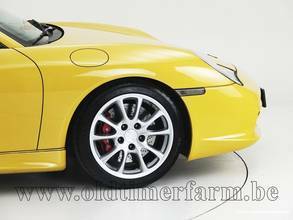
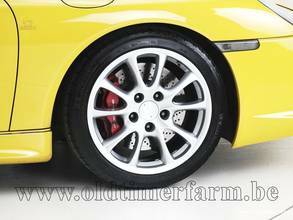
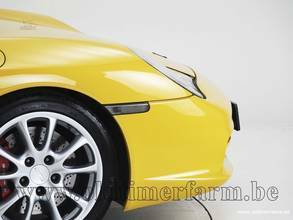
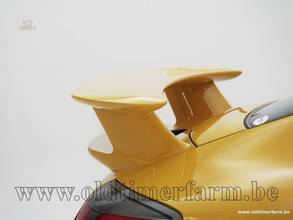
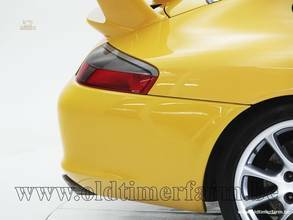
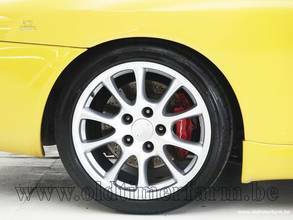
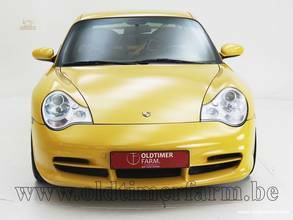
To bring the vehicle's track-prowess to the maximum level, Porsche endowed the GT3 with enlarged brakes, a lowered, re-tuned suspension system, lighter-weight wheels and a new front bumper with matched rear spoiler to help increase downforce, thereby increasing grip.
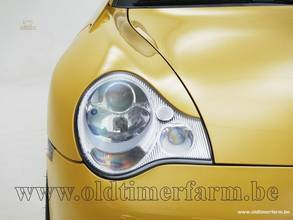
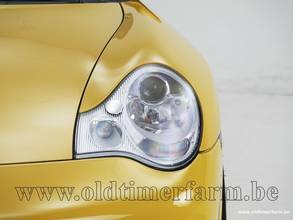
Porsche made significant updates to the GT3 for 2004 model year (the first year the car was offered to US customers), using the 2002 996 facelift including headlights that were differentiated from the entry-level Boxster. This model is commonly known as the 996.2 GT3. Engine power output rating was raised to 381 PS (280 kW) and torque to 284 lb⋅ft (385 Nm), 80% of which was available from 2,000 rpm. The braking setup was upgraded, now featuring 6-piston calipers on the front (rears remained 4-piston), The GT3 now used the body shell of the Carrera 4.
In track testing by American automotive journals, the GT3 managed a 0–60 mph (0–97 km/h) acceleration time of 4.5 seconds and a quarter mile time of 12.0 seconds at 118 mph (190 km/h). During skidpad testing, the GT3 posted 1.03g.