These services and technologies are essential for operating Herando and enable, for example, security-related functionalities. They also help us recognize whether you want to stay logged in to your profile so we can provide our services more quickly when you visit again.
Without these cookies, the website cannot be operated properly. Therefore, deactivation is not possible.
| Cookie name | Provider / lifetime | Purpose |
|---|---|---|
| herando | Herando / Session | Required so a user can stay signed in. Enables access to protected areas without signing in again. |
| herando-backend | Herando / Session | Ensures authentication in the backend area and access control for protected functions. |
| frontend | Herando / 2 hours | Required to maintain frontend sessions and avoid signing in again. |
| frontend_cid | Herando / 2 hours | Assigns the current session to the consent ID in the frontend area. |
| cc | Herando / 1 year | Stores your cookie consent settings. |
| cid | Herando / 1 year | Stores a unique ID for documenting your cookie consent. |
| _GRECAPTCHA | Google reCAPTCHA / 6 months | Protects the website from automated access, spam, fraud, and abuse. |
Legal basis:
Processing is based on Art. 6(1)(f) GDPR (legitimate interest in secure and functional operation of the website) and § 165(3) TKG (AT) / § 25(2) TTDSG (DE).
To further improve our services, we collect anonymized data for statistics and analysis. Using this data, we can, for example, measure visitor numbers and the effectiveness of specific pages on our website and optimize our content.
Providers:
Google Ireland Limited, Gordon House, Barrow Street, Dublin 4, Ireland
Meta Platforms Ireland Ltd., 4 Grand Canal Square, Dublin 2, Ireland
Purpose:
Analysis of user behavior, reach measurement, content optimization, and evaluation of individual page usage.
Processed data:
IP address (shortened/anonymized), device and browser information, visit duration, page views, interactions, referrer URL.
Legal basis:
Your consent pursuant to Art. 6(1)(a) GDPR in conjunction with § 165(3) TKG (AT) / § 25(1) TTDSG (DE).
Third-country transfer:
Transfer to third countries (e.g. USA) cannot be ruled out. Providers are certified under the EU–US Data Privacy Framework.
Storage period:
Up to 14 months unless otherwise stated.
| Cookie name | Provider / lifetime | Purpose |
|---|---|---|
| _ga | Google Analytics / 2 years | Identifies unique users |
| _gid | Google Analytics / 24 hours | User behavior analysis |
| _gat_* | Google Analytics / 1 minute | Request rate throttling |
| _gat_UA-* | Google Analytics / 1 minute | Controls data transmission |
| OTZ | Google Analytics / 1 month | Aggregated website traffic information |
| AEC | Google / 6 months | Protection against spam, fraud and abuse |
| NID | Google / up to 10 years | Embedding external content (e.g. YouTube) |
| _fbp | Meta (Facebook) / 6 months | Page view analysis |
| datr | Meta (Facebook) / 9 months | Security and fraud prevention |
| locale | Meta (Facebook) / 1 week | Stores language settings |
| oo | Meta (Facebook) / 13 months | Stores opt-out status |
| sb | Meta (Facebook) / 11 months | Browser identification |
| m_pixel_ratio | Meta (Facebook) / Session | Website performance testing |
You can withdraw your consent at any time via “Cookie settings”.
13.950,00 €
Oldtimerfarm BV
Steenweg op Deinze 51 C
9880 Aalter - Belgium
Xavier GSM: +32 (0)472 401338
info@oldtimerfarm.be
BTW BE 0886.122.516
| Body type | |
| Mileage | 82.961 km |
| Gearbox | Manual |
| Engine capacity | 425 cm³ |
| First registration | 1964 |
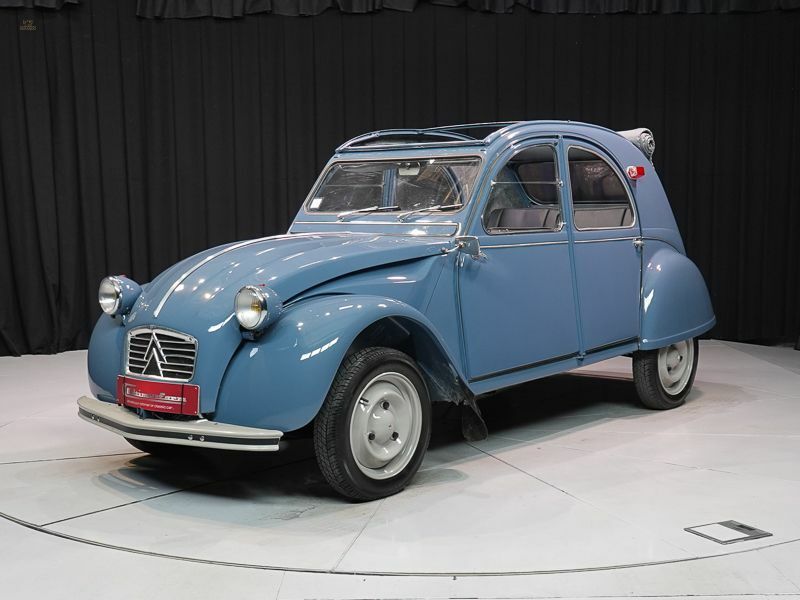
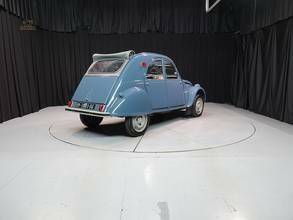
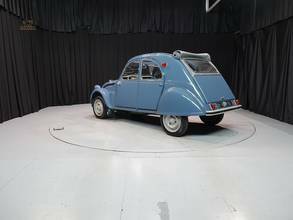
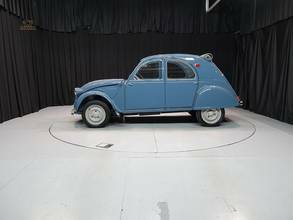
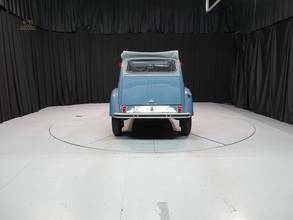
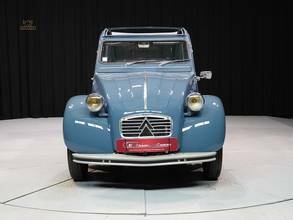
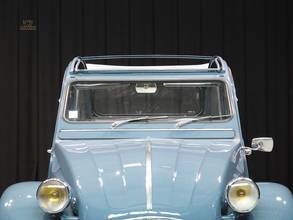
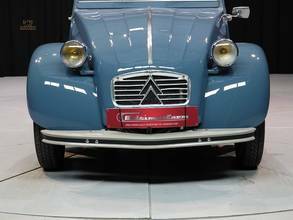
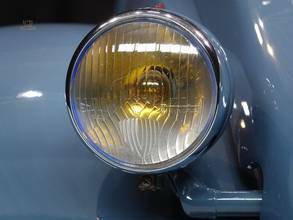
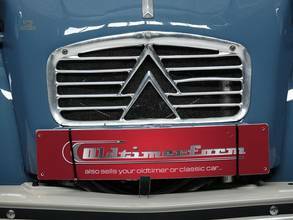
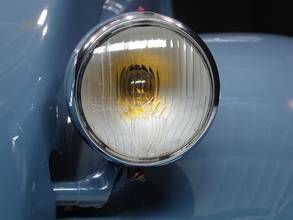
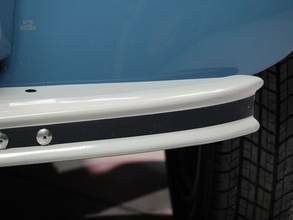
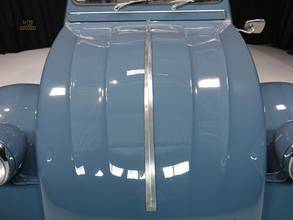
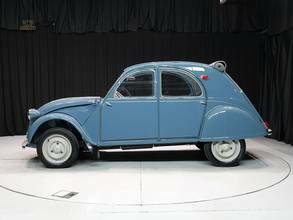
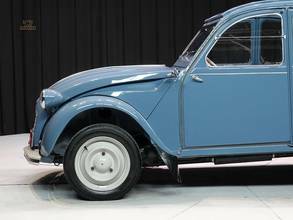
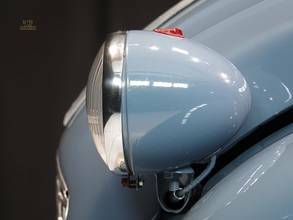
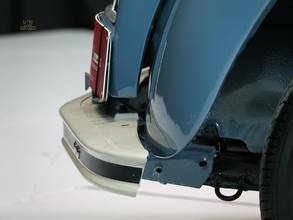
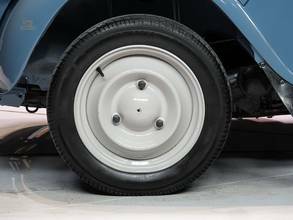
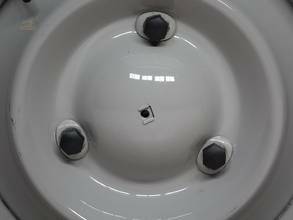
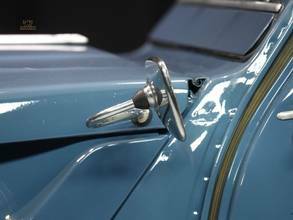
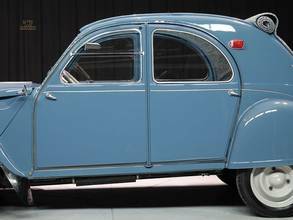
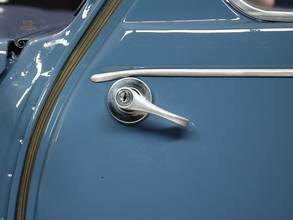
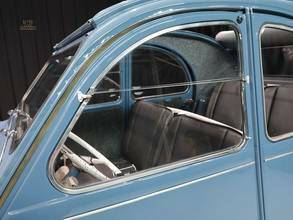
The Citroën 2CV (French: “deux chevaux” i.e. “deux chevaux vapeur”, literally “two tax horsepower”) was an economy car produced by the French automaker Citroën between 1948 and 1990. It was technologically advanced and innovative, but with uncompromisingly utilitarian unconventional looks, and deceptively simple Bauhaus inspired bodywork, that belied the sheer quality of its underlying engineering. It was designed to move the French peasantry on from horses and carts. It is considered one of Citroën's most iconic cars. In 1953 Autocar in a technical review of the car wrote of "the extraordinary ingenuity of this design, which is undoubtedly the most original since the Model T Ford". It was described by CAR magazine journalist and author LJK Setright as "the most intelligent application of minimalism ever to succeed as a car". It was designed for low cost, simplicity of use, versatility, reliability, and off-road driving. For this it had a light, easily serviceable engine, extremely soft long travel suspension (with adjustable ride height), high ground clearance, and for oversized loads a car-wide canvas sunroof (which until 1960 also covered the boot).
During a production run of 42 years between 1948 and 1990, 3,872,583 2CVs were produced, plus 1,246,306 Fourgonnettes (small 2CV delivery vans), as well as spawning mechanically identical vehicles including the Ami – 1,840,396; the Dyane – 1,444,583; the Acadiane – 253,393; and the Mehari – 144,953, a grand total of 8,756,688.
From 1988 onwards, production took place in Portugal rather than in France. This arrangement lasted for two years until 2CV production halted. Portuguese built cars, especially those from when production was winding down, have a reputation in the UK for being much less well made and more prone to corrosion than those made in France. Paradoxically the Portuguese plant was more up-to-date than the one in Levallois, and Portuguese 2CV manufacturing was to higher quality standards.
Specifications
Bodywork
Mechanics