Diese Services und Technologien sind für den Betrieb von Herando unbedingt erforderlich und ermöglichen beispielsweise sicherheitsrelevante Funktionalitäten. Außerdem erkennen wir mithilfe dieser Cookies, ob Sie in Ihrem Profil eingeloggt bleiben möchten, um Ihnen unsere Dienste bei einem erneuten Besuch schneller zur Verfügung zu stellen.
Ohne diese Cookies kann die Website nicht ordnungsgemäß betrieben werden. Eine Deaktivierung ist daher nicht möglich.
| Cookie-Name | Anbieter / Lebensdauer | Zweck |
|---|---|---|
| herando | Herando / Session | Erforderlich, damit ein Benutzer auf der Website angemeldet bleiben kann. Ermöglicht den Zugriff auf geschützte Bereiche ohne erneute Anmeldung. |
| herando-backend | Herando / Session | Sicherstellung der Authentifizierung im Backend-Bereich und Zugriffskontrolle für geschützte Funktionen. |
| frontend | Herando / 2 Stunden | Erforderlich, um Sitzungen im Frontend aufrechtzuerhalten und einen erneuten Login zu vermeiden. |
| frontend_cid | Herando / 2 Stunden | Zuordnung der aktuellen Sitzung zur Einwilligungs-ID im Frontend-Bereich. |
| cc | Herando / 1 Jahr | Speicherung Ihrer Cookie-Einwilligungseinstellungen. |
| cid | Herando / 1 Jahr | Speicherung einer eindeutigen ID zur Dokumentation Ihrer Cookie-Einwilligung. |
| _GRECAPTCHA | Google reCAPTCHA / 6 Monate | Schutz der Website vor automatisierten Zugriffen, Spam, Betrug und Missbrauch. |
Rechtsgrundlage:
Die Verarbeitung erfolgt auf Grundlage von Art. 6 Abs. 1 lit. f DSGVO (berechtigtes Interesse an einem sicheren und funktionsfähigen Betrieb der Website) sowie § 165 Abs. 3 TKG (AT) / § 25 Abs. 2 TTDSG (DE).
Um unsere Angebote weiter zu verbessern, erfassen wir anonymisierte Daten für Statistiken und Analysen. Mithilfe dieser Daten können wir beispielsweise Besucherzahlen und den Effekt bestimmter Seiten unseres Web-Auftritts ermitteln und unsere Inhalte optimieren.
Anbieter:
Google Ireland Limited, Gordon House, Barrow Street, Dublin 4, Irland
Meta Platforms Ireland Ltd., 4 Grand Canal Square, Dublin 2, Irland
Zweck:
Analyse des Nutzerverhaltens, Reichweitenmessung, Optimierung von Inhalten sowie Auswertung der Nutzung einzelner Seiten.
Verarbeitete Daten:
IP-Adresse (gekürzt/anonymisiert), Geräte- und Browserinformationen, Besuchsdauer, Seitenaufrufe, Interaktionen, Referrer-URL.
Rechtsgrundlage:
Ihre Einwilligung gemäß Art. 6 Abs. 1 lit. a DSGVO i. V. m. § 165 Abs. 3 TKG (AT) / § 25 Abs. 1 TTDSG (DE).
Drittlandübermittlung:
Eine Übermittlung in Drittländer (z. B. USA) kann nicht ausgeschlossen werden. Die Anbieter sind nach dem EU-US Data Privacy Framework zertifiziert.
Speicherdauer:
Bis zu 14 Monate, sofern nicht anders angegeben.
| Cookie Name | Anbieter / Lebensdauer | Zweck |
|---|---|---|
| _ga | Google Analytics / 2 Jahre | Identifikation eindeutiger Nutzer |
| _gid | Google Analytics / 24 Stunden | Analyse des Nutzerverhaltens |
| _gat_* | Google Analytics / 1 Minute | Drosselung der Anfragerate |
| _gat_UA-* | Google Analytics / 1 Minute | Steuerung der Datenübermittlung |
| OTZ | Google Analytics / 1 Monat | Aggregierte Informationen zum Webseiten-Traffic |
| AEC | Google / 6 Monate | Schutz vor Spam, Betrug und Missbrauch |
| NID | Google / bis zu 10 Jahre | Einbettung externer Inhalte (z. B. YouTube) |
| _fbp | Meta (Facebook) / 6 Monate | Analyse von Seitenaufrufen |
| datr | Meta (Facebook) / 9 Monate | Sicherheits- und Betrugsprävention |
| locale | Meta (Facebook) / 1 Woche | Speicherung der Spracheinstellung |
| oo | Meta (Facebook) / 13 Monate | Speicherung des Opt-Out-Status |
| sb | Meta (Facebook) / 11 Monate | Browser-Identifikation |
| m_pixel_ratio | Meta (Facebook) / Session | Performance-Tests der Webseite |
Sie können Ihre Einwilligung jederzeit über „Cookie-Einstellungen“ widerrufen.
2.100.000,00 €
| Renditeimmobilien | Grundstücke |
| Wohnfläche | 6.000 m² |
| Grundstücksfläche | 2.670.000 m² |
| Qualität | Erstbezug |
| MwSt. | zuzüglich |
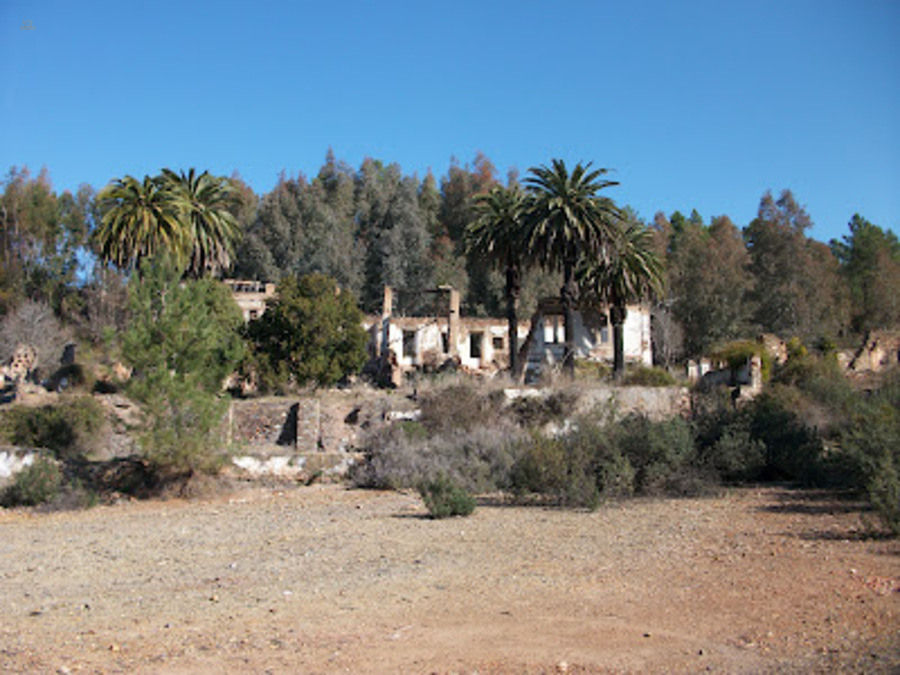
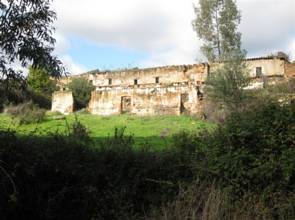
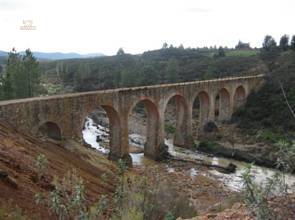
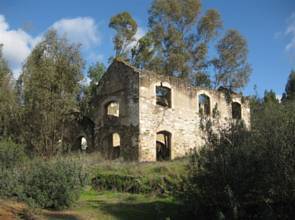
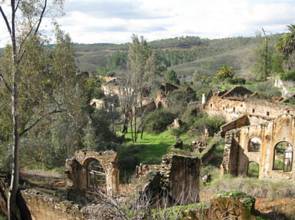
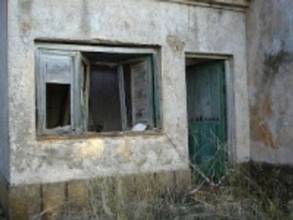
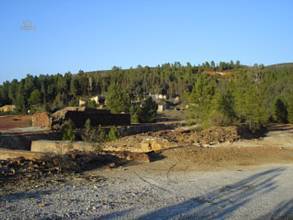
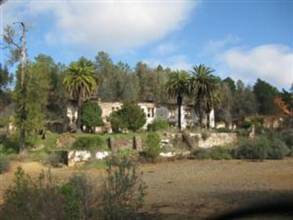
San Miguel is an abandoned mining village int he province of Huelva occuping more than 6,000 m2 and with 267 hectares of land. The village can be rebuilt for individual housing, tourist development or similar use on most parts of the property. No planning or building permission is permitted in this district unless forming part of a restoration project such as this. The land lies in two parcels, one of 224 hectares comprising the village and surroundings, and the other of 29 hectares enclosing the reservoir and adjacent land. The water surface of the reservoir covers 14 hectares when full and is connected to the village by a canal which forms part of the main parcel of land. A bridge built for the railway line which originally services the mining community crosses the river that passes through the property and is in sound condition, capable of bearing heavy loads but only wide enough for a single vehicle at a time. The main access to the property does not require the use of this bridge. There are 19 buildings of approximately 6,000 m2 and on the other side of the river about 4-5,000 m2 of older buildings comprising 9 long rows of miners cottages. The city of Huelva and beaches are 90 km away and the city of Seville 120 km HISTORY The village was (and still is) called San Miguel. There are several small Roman shafts grouped in a small area near the old mine. As in all of southern Spain no mining activity took place after the Romans left until the nineteenth century when Rio Tinto and the other smaller mines started operating. Building at San Miguel must have started around 1845 although a large farmhouse stood there from a much earlier date. Mining continued discontinuously for over a century, frequently interrupted by market conditions or wars. A small pocket of gold-bearing ore from the surface was sold to Rio Tinto in 1994 but no real mining has been done since 1970 when the ore-bodies were considered depleted. The owner's family bought the property in 1926 and since then no underground mining has been carried out, all the extractive operations being done in the small open-cast. Rio Tinto rented this open-cast and worked it on a small scale for eleven years (1959-1970). Except the gold ores taken in 94 no further mineral has been mined. In its heyday around 1900 to 1914 the mine employed about 400 men of which about half actually lived and were housed there. The private narrow-gague railway carried the ore to a junction with the main Huelva line. San Miguel was equipped with a small, fully-staffed hospital, had its own shops and repair sheds for its locomotives and good housing for the levels expected at the time.
Community Features
Country/Mountain Views
Gravel/Earth Track
Please note: These property details have been provided by the original agent.